
Blog
Dust and Pollution Effects on Engine Performance: What Every Car Owner Should Understand

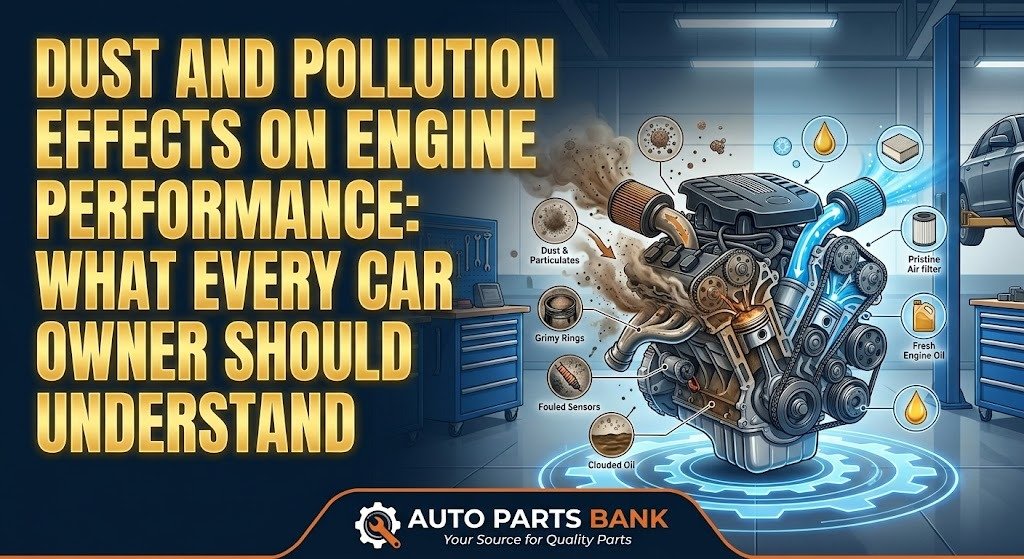
Your engine is engineered to withstand extreme temperatures, continuous friction, and high combustion pressure. What it is not built to tolerate is constant exposure to airborne dust, industrial soot, and harsh environmental pollutants.
Whether you are navigating daily city traffic in Lahore or Karachi, driving through active construction corridors, or cruising dusty highway routes, your vehicle is constantly exposed to microscopic airborne contaminants. Over time, these fine particles degrade combustion efficiency, contaminate engine oil, block cooling fins, and cause electronic sensors to misread data. The damage doesn’t happen overnight—but without regular maintenance, it turns into an expensive overhaul.
Understanding how dust and pollution impact your engine empowers you to make smarter maintenance decisions and choose the right replacement parts before minor issues turn into major engine failures.
How Dust and Pollution Enter Your Engine System
Although modern engines operate as sealed units, they rely heavily on continuous outside airflow to create combustion and manage crankcase ventilation. This necessity creates direct entry points for airborne debris.
Primary Entry Points Include:
- Air Intake System: Clean air must pass through to mix with fuel.
- Low-Quality or Clogged Filters: Subpar filter media allows fine silica dust to bypass the housing.
- Crankcase Ventilation (PCV) System: Recycles internal blow-by gases.
- Worn Seals and Gaskets: Microscopic gaps allow dust to breach crankcase boundaries.
- Contaminated Fuel System: Dust and moisture entering through unsealed fuel caps or storage tanks.
1. Air Filter Contamination & Combustion Efficiency Loss
The air filter is your engine’s first line of defense. For every liter of fuel consumed, an engine requires thousands of liters of clean air. When dust and heavy urban smog clog the filter media, restricted airflow severely disrupts the air-to-fuel ratio.
Consequences of Dust Ingress:
- Restricted Airflow: Forces the engine to “gasp,” reducing horsepower and responsiveness.
- Increased Fuel Consumption: Unbalanced air-fuel mixtures waste raw fuel.
- Carbon Build-Up & Knocking: Unburnt fuel forms carbon deposits inside the combustion chamber.
- Abrasive Cylinder Cylinder Wear: Fine silica dust acts like sandpaper against piston rings and cylinder walls, leading to loss of compression over time.
OEM vs. Aftermarket Air Filters
| Parameter | Genuine OEM | Quality Aftermarket Parts |
| Fit & Seal | 100% Factory Matched | Varies by Brand Quality |
| Filtration Standard | Manufacturer Tested | Grade Dependent |
| Durability | Standard Service Life | Material Based (e.g., Synthetic) |
| Price | Premium | Economical & High Value |
💡 Pakistani Driving Tip: During peak winter smog seasons, standard filter replacement intervals (15,000 KM) should be cut down. Inspect your air filter every 3,000 KM to 5,000 KM to keep your fuel economy intact.
2. Engine Oil Contamination & Internal Component Wear
When microscopic dust bypasses worn piston rings, it mixes directly with engine oil inside the crankcase.
Dust Enters Intake ➔ Bypasses Piston Rings ➔ Mixes with Crankcase Oil ➔ Oil Turns Abrasive
Once engine oil absorbs fine soot and dust, it loses its viscosity and lubricating capability. Instead of reducing friction, it turns into an abrasive sludge that wears down critical engine components.
Resulting Mechanical Damage:
- Accelerated bearing and camshaft wear.
- Severe oil sludge formation inside valve covers.
- Reduced overall oil pressure.
- Elevated operating temperatures due to increased internal friction.
The Fix: Stick strictly to your oil change schedules, and never reuse an old oil filter. Sourcing high-efficiency oil filters guarantees fine particles remain trapped before reaching delicate bearings.
3. Turbocharger Wear in Heavy Smog & Polluted Conditions
Turbocharged engines (commonly found in modern crossovers like the MG HS, Haval H6, or Changan Alsvin) are particularly sensitive to dust ingress.
Because a turbocharger turbine spins at exceeding speeds—often above 100,000 RPM—even microscopic dust grains entering the compressor housing can cause catastrophic damage:
- Erasing or pitting compressor blade edges.
- Creating subtle rotor shaft imbalances.
- Decreasing boost pressure and engine efficiency.
- Causing premature total turbocharger failure.
Replacing a damaged turbocharger is an expensive repair. High-quality air filtration is cheap insurance against turbo wear.
4. Reduced Cooling System Efficiency
Dust doesn’t just harm the inside of your engine—it builds up on the exterior cooling assemblies. Your vehicle’s radiator, AC condenser, and intercooler fins sit directly behind the front grille, leaving them completely exposed to road dust, mud, and flying debris.
Airborne Dust ➔ Clogs Radiator Fins ➔ Blocks Exterior Airflow ➔ Causes Engine Overheating
Impact on Cooling Performance:
- Restricted heat dissipation through the radiator core.
- Higher engine operating temperatures under heavy load or air conditioning use.
- Severe thermal stress on cylinder heads and head gaskets.
Maintenance Tip: Inspect your radiator fins periodically. Gently wash away accumulated dirt with a low-pressure hose, taking care not to bend the delicate aluminum cooling fins.
5. Sensor Malfunctions & Engine Management Errors
Modern engines rely heavily on electronic sensors to calibrate fuel injection, ignition timing, and emission controls. Heavy particulate exposure disrupts their accuracy:
- Mass Air Flow (MAF) Sensor: Dust coating the hot-wire element sends false air-volume data to the ECU.
- Oxygen ($O_2$) & MAP Sensors: Soot accumulation causes slow sensor responses, triggering a Check Engine Light (CEL), rough idling, and poor pickup.
- EGR Valves: Carbon and dirt build-up cause the valve to stick open or closed, leading to misfires.
If cleaning these sensors with specialized electronics cleaner fails to fix performance issues, replacing them with certified OEM or OEM-equivalent parts instantly restores factory throttle response.
6. Fuel System Contamination
Dust particles often enter the fuel tank during refueling at dusty roadside stations or via degraded fuel cap seals.
Long-Term Effects on Fuel Components:
- Fuel Pump Strain: Foreign particles clog the fuel pump strainer early.
- Injector Tip Clogging: Restricts fuel spray patterns, leading to uneven combustion, engine misfiring, and high tailpipe emissions.
Replacing your fuel filter according to manufacturer intervals protects your fuel injectors from microscopic grit and saves you from costly fuel system repairs down the road.
Environmental Exposure vs. Maintenance Intervals
| Driving Environment | Primary Contaminants | Most Vulnerable Parts | Recommended Action |
| Heavy Smog / Urban Traffic | Carbon Soot, Toxic PM2.5 | Air Filter, MAF/O2 Sensors | Inspect monthly; replace filter early. |
| Construction Corridors | Fine Silica Dust, Gravel | Air Filter, Piston Rings | Frequent air filter cleaning/replacement. |
| Highways / Intercity | Road Grime, Insects | Radiator & Intercooler Fins | Flush cooling fins periodically. |
| Unpaved / Rural Roads | Coarse Dust, Sand | Oil Filter, Air Filter, Seals | Shorten oil change intervals. |
Early Warning Signs of Dust-Related Engine Strain
Be proactive! Look out for these early warning signs:
- Sudden drop in daily fuel mileage.
- Rough idling or engine shaking when stopped.
- Sluggish acceleration or delayed throttle response.
- Squealing noises or unusual mechanical whine from the engine bay.
- Engine temperature gauge running higher than normal.
- Illuminating Check Engine Light (CEL).
Protect Your Engine with Auto Parts Bank
Preventive maintenance requires parts you can depend on. At Auto Parts Bank, we take the guesswork out of sourcing quality automotive components for all major Japanese, Chinese, and European vehicle makes across Pakistan.
Why Car Owners Choose Auto Parts Bank:
- Guaranteed Authenticity: 100% genuine OEM components and verified aftermarket brands.
- Precise Fitment: Guaranteed compatibility with your specific make, model, and year.
- Nationwide Doorstep Delivery: Fast, reliable shipping across Pakistan.
- Transparent Pricing: Competitive prices without hidden markups.
Car Maintenance Tips, Engine Air Filter, Engine Oil Contamination, Auto Parts Bank, Car Care Pakistan, Smog Car Maintenance, Sensor Cleaning, OEM Spare Parts