
Blog
What Car Parts Need Replacement First as a Car Ages

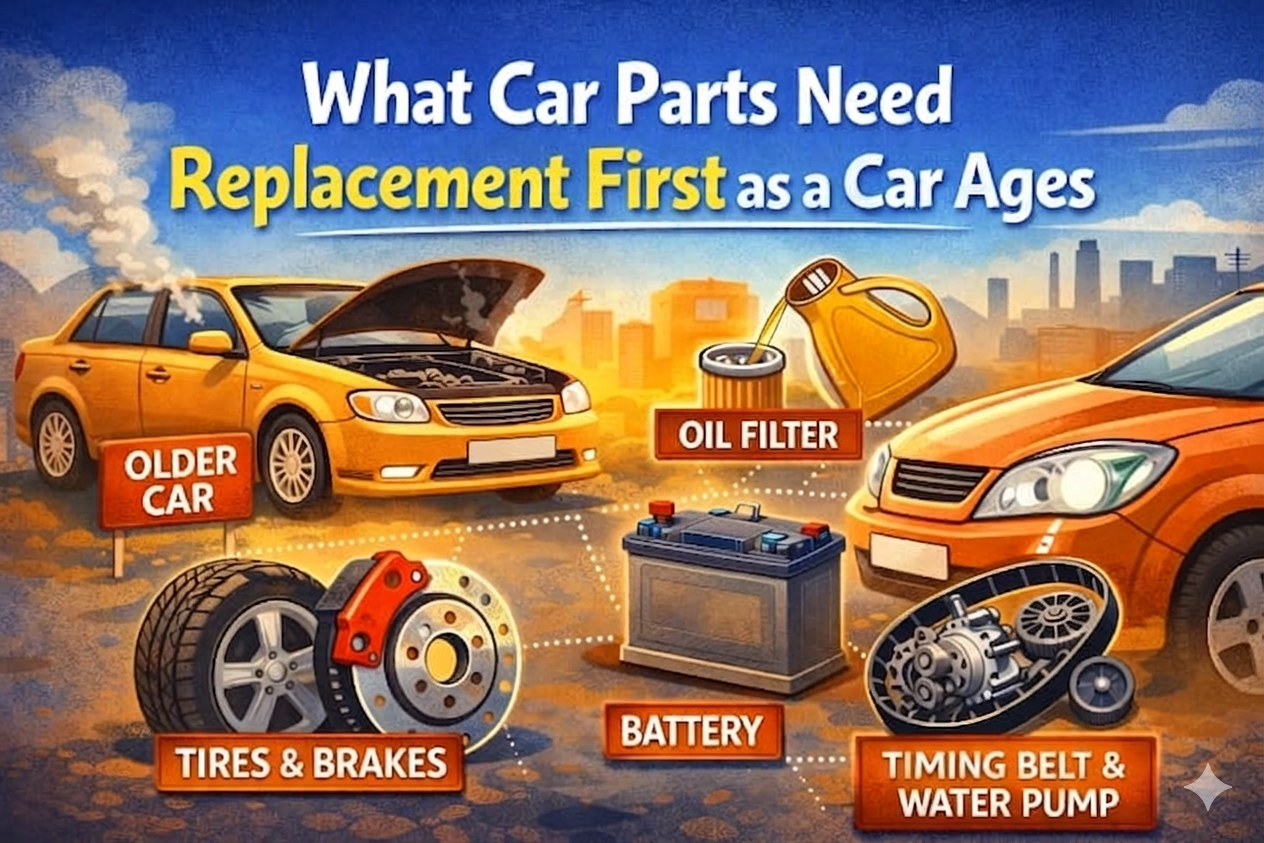
Cars do not fail suddenly. Most components deteriorate gradually, giving clear warning signs long before complete failure. The challenge is that many drivers do not recognize these signals early enough. By the time a part completely fails, it often damages surrounding components and increases repair costs.
Understanding what car parts need replacement first helps both car owners and workshops prevent cascading mechanical problems. Age, driving conditions, and maintenance quality all influence which components wear out earliest, but some parts consistently reach the end of their life sooner than others.
Suspension Bushings And Links Are Often The First To Age
Suspension bushings are small rubber components that absorb vibrations and maintain alignment between suspension arms and the chassis. On Indian roads, these parts experience constant stress from potholes, uneven surfaces, and speed breakers.
A healthy suspension bushing looks intact and firmly seated within its housing. The rubber should appear solid without cracks or deformation. When bushings start failing, the rubber surface develops small cracks and begins separating from the metal sleeve.
Drivers usually notice symptoms such as mild knocking sounds while driving over bumps, steering looseness, or slightly unstable handling during turns. Many people mistake this for tyre or alignment issues when the real cause is worn bushings.
Ignoring worn bushings allows excess movement in the suspension system, which accelerates wear on tyres, control arms, and ball joints.
Engine Mounts Gradually Lose Their Ability To Absorb Vibrations
Engine mounts secure the engine to the chassis while absorbing vibrations produced during operation. These mounts typically contain rubber or hydraulic material that isolates engine movement.
When healthy, engine mounts hold the engine firmly with minimal visible movement during idle. However, as the rubber ages, it hardens and cracks. Hydraulic mounts may also leak fluid internally.
One simple observation is engine movement during startup. If the engine visibly jerks or tilts excessively when the car starts, worn mounts are a likely cause.
Inside the cabin, drivers may notice increased vibrations through the steering wheel or floor. Over time, failing engine mounts can also affect exhaust alignment and transmission mounts.
Brake Components Wear Faster Than Most Mechanical Parts
Brake pads and brake discs are designed to wear out. They convert motion into heat, and this constant friction gradually reduces their thickness.
Healthy brake pads maintain sufficient friction material, while worn pads appear thin and sometimes produce squealing noises. Brake discs should have a smooth, even surface. Grooves or uneven wear indicate excessive heat cycles or poor pad condition.
Drivers often notice longer braking distances, vibration while braking, or metallic grinding sounds when brake components reach critical wear levels.
Timely replacement prevents damage to the brake caliper and ensures consistent braking performance.
Ignition Components Slowly Lose Efficiency
Spark plugs and ignition coils are essential for proper combustion. Over time, spark plugs develop electrode wear and carbon deposits, reducing ignition efficiency.
A healthy spark plug electrode appears sharp and clean with minimal carbon buildup. Worn plugs often show rounded electrodes, heavy carbon deposits, or oil contamination.
Symptoms of failing ignition components include reduced mileage, rough idling, and hesitation during acceleration.
Rubber Hoses And Belts Deteriorate With Age
Rubber components such as coolant hoses and drive belts deteriorate primarily due to heat exposure. Even if a car is driven less frequently, rubber parts age over time.
Healthy belts should feel firm with visible rib patterns. Cracks across the belt ribs or frayed edges indicate imminent failure.
Similarly, coolant hoses should feel slightly firm but flexible. A hose that feels excessively soft, swollen, or brittle may burst under pressure.
A broken drive belt can disable essential systems like the alternator, power steering, or air conditioning.
Sensors Become Less Accurate Over Time
Modern cars rely on sensors to manage fuel delivery, emissions, and engine performance. Oxygen sensors, airflow sensors, and temperature sensors slowly lose accuracy with prolonged exposure to heat and contaminants.
A failing sensor may not trigger an immediate fault code but can cause subtle problems such as reduced mileage, rough idle, or poor throttle response.
Replacing ageing sensors restores engine efficiency and helps maintain consistent performance.
Why Ageing Parts Often Cause Chain Reactions
Mechanical components rarely fail in isolation. When one worn part continues operating, it places additional stress on surrounding systems.
For example, worn suspension bushings increase tyre wear, failing engine mounts stress exhaust joints, and worn spark plugs overload ignition coils.
Preventive replacement of ageing parts keeps the entire vehicle operating smoothly and avoids unexpected breakdowns.
Why Correct Part Selection Matters During Replacement
Replacing ageing components with incorrect or low quality parts often creates new problems. Slight compatibility differences can lead to premature wear, vibration, or poor performance.
Autodukan helps workshops and car owners source genuine OEM spare parts with accurate compatibility so replacements restore original performance instead of introducing new issues. Reliable part selection ensures ageing components are replaced correctly and the vehicle remains dependable.
Conclusion
Understanding what car parts need replacement first allows drivers to address problems before they escalate. Suspension bushings, engine mounts, brake components, ignition parts, belts, and sensors typically age faster than other components.
Recognising early warning signs and replacing parts at the right time keeps the car reliable, safe, and efficient over the long term.
FAQs
What car parts wear out the fastest?
Brake pads, suspension bushings, belts, spark plugs, and engine mounts usually wear out earliest.
How do I know if suspension bushings are worn?
Knocking sounds, unstable steering, and uneven tyre wear are common signs.
Do rubber car parts fail with age even if the car is rarely driven?
Yes. Heat and time gradually deteriorate rubber hoses, belts, and mounts.